

Stop Throwing Money at Supplements That Aren’t Doing Anything
The Everwell Edit: A No-BS Guide to What Midlife Women Actually Need

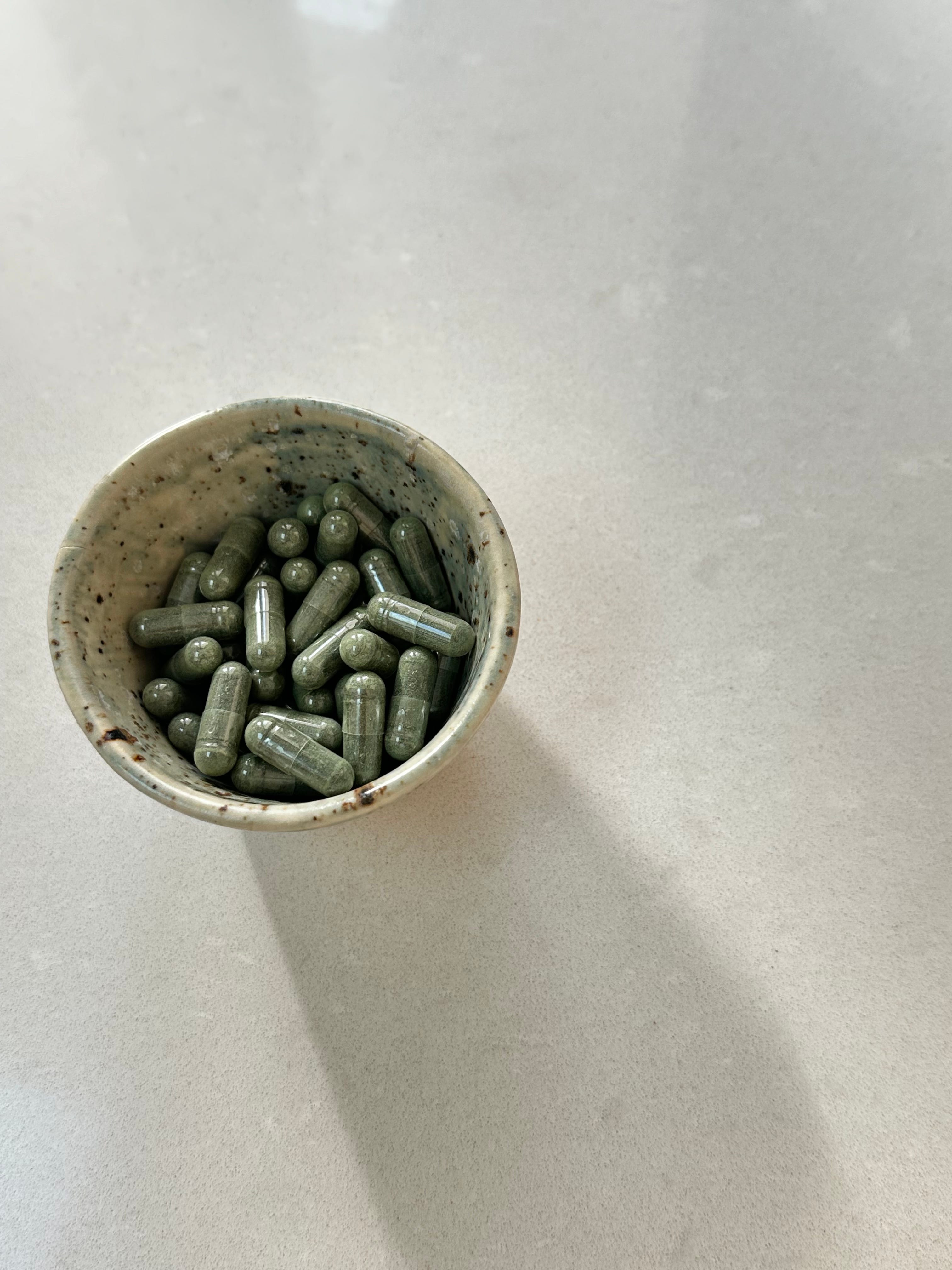
If you’ve ever stood in the supplement aisle, or scrolled past yet another ad for a $99/month green powder, and thought “Do I actually need all this?” … you’re not alone. And you’re asking the right question.
Here’s the truth nobody selling you supplements wants you to hear: the supplement industry is a $35+ billion market in the U.S. alone, and women are its #1 customer. Nearly 64% of us are taking supplements, and many of us are spending money on the wrong ones while skipping the ones that actually matter for this stage of life.
As someone with a clinical background in healthcare and a personal obsession with the science of aging well, I want to cut through the noise for you.
First, the Greens Powder Question
Let’s address the elephant in the room: those gorgeous green powders with the influencer endorsements and the premium price tags.
Here’s what the research actually says:
Greens powders do contain vitamins, minerals, and antioxidants
But they lose most of their fiber during processing, and fiber is one of the most critical nutrients for midlife women
Most use “proprietary blends,” meaning you have no idea how much of each ingredient you’re actually getting
A single serving gives you roughly 2 grams of fiber. Five servings of whole fruits and vegetables gives you about 15 grams
They are NOT regulated by the FDA
The bottom line: A bag of frozen spinach costs $2. A month of greens powder costs $80-100. If your diet is already decent, that greens powder is expensive urine. If you’re truly struggling to eat any vegetables, it’s a supplement, not a replacement. And a basic multivitamin may serve you better for a fraction of the cost.
What’s Actually Happening in Your Body Right Now
Here’s what nobody told us in our 20s and 30s: midlife isn’t just about hot flashes and mood swings. When estrogen starts declining, it triggers a cascade of changes that directly affect what our bodies need nutritionally.
Estrogen decline means:
Accelerated bone loss (estrogen protects bone density)
Increased systemic inflammation (estrogen is anti-inflammatory)
Changes in how your body absorbs and uses key nutrients like magnesium
Loss of lean muscle mass and shifts in body composition
Reduced ability to produce choline through the PEMT enzyme
Changes in brain function, mood, and sleep
This is why a generic women’s multivitamin from your 30s may not be cutting it anymore.
The Short List: Supplements That Actually Earn Their Spot
Based on current research, not Instagram ads, here’s what the evidence supports for midlife women. Think of this as your “invest here first” list.
1. Magnesium: The MVP You’re Probably Missing
Magnesium is involved in 300+ processes in your body, including sleep, mood regulation, muscle function, and bone health. And yet about 64% of midlife women don’t even meet the RDA of 320mg/day.
It gets worse: estrogen actually plays a role in magnesium metabolism. As estrogen drops, your magnesium needs effectively go up while your absorption may go down. Many common medications also decrease magnesium absorption.
What to look for:
Magnesium glycinate → calming, gentle on digestion, great for sleep
Magnesium citrate → helpful if constipation is an issue
Magnesium threonate → best for brain/cognitive support (pricier)
AVOID magnesium oxide → poorly absorbed, mostly acts as a laxative
Watch out for: Supplements that sneak in high-dose vitamin B6 (pyridoxine). In excess over time, it can cause nerve issues.
Cost: ~$12-25/month
2. Vitamin D + Calcium: The Bone Health Power Couple
These two work together, and current evidence recommends at least 1,200mg of calcium and 800-2,000 IU of vitamin D daily for postmenopausal women. But here’s the key: get your vitamin D levels tested first. There’s no universal dose. Your needs depend on your baseline.
Food-first is ideal (dairy, fortified plant milks, sardines, leafy greens), but supplementation is often necessary since most women fall short.
Pro tip: Pair vitamin D with K2 for better calcium absorption and to help direct calcium to your bones instead of your arteries.
Cost: ~$10-20/month
3. Omega-3 Fatty Acids (Fish Oil)
Your brain and heart need DHA and EPA, and there’s evidence that our ability to convert dietary sources into usable omega-3s declines with age. This one matters for inflammation, cognitive function, cardiovascular health, and mood.
What to look for: A high-quality, purified fish oil with at least 500mg combined EPA/DHA. Third-party tested for purity.
Cost: ~$15-30/month
4. Creatine. Yes, Really.
This isn’t just for gym bros anymore. Emerging research from Stanford suggests creatine may help offset mood changes during perimenopause, including anxiety, depression, and brain fog. It’s also critical for maintaining muscle mass and bone health, two things we’re actively losing.
A recent study found that adding creatine to therapy for depression led to greater symptom improvement compared to therapy alone.
Dose: 3-5 grams per day. Timing doesn’t matter. Look for creatine monohydrate with a water-based wash (acid-based washes can cause GI issues).
Cost: ~$10-15/month (one of the cheapest, most well-researched supplements out there)
5. Protein (Yes, It Counts)
Not technically a “supplement” in the traditional sense, but research shows midlife women need 1.1-1.5 grams of protein per kilogram of body weight daily to preserve lean mass. Most of us aren’t hitting that. A quality protein powder can help bridge the gap.
Cost: ~$25-40/month
6. Choline: The One Nobody’s Talking About
As estrogen drops, we lose our ability to produce choline efficiently. Deficiency increases the risk of fatty liver disease and may impact cognitive health. Emerging research points to citicoline as a promising supplement form that may be less likely to convert to TMAO (a compound linked to heart disease risk).
Cost: ~$15-25/month
What You Can Probably Skip
Biotin for hair loss → Only helps if you have an actual biotin deficiency, which is rare. Address hormonal changes and ensure adequate protein, iron, and zinc instead.
Collagen supplements → Limited evidence specifically for menopausal women. Vitamin C (which supports natural collagen production) has better evidence.
Generic women’s multivitamins → Rarely contain enough of any single nutrient to make a meaningful difference at this stage. Targeted supplementation is more effective.
Expensive greens powders as your primary strategy → See above.
The Real Talk on Cost
Let’s do some math. If you bought every trendy supplement being marketed to midlife women, you could easily spend $200-400/month.
A smarter midlife supplement stack might look like:
SupplementApproximate Monthly CostMagnesium glycinate$15Vitamin D3 + K2$12Omega-3 fish oil$20Creatine monohydrate$12Total~$59/month
That’s less than a single month of most premium greens powders, and every one of these has solid research behind it for what our bodies are actually going through right now.
Add protein powder and choline if your diet has gaps, and you’re still under what a lot of women are spending on supplements that may not be doing much.
Before You Buy Anything: The Checklist
✅ Get bloodwork done. Test vitamin D, B12, iron/ferritin, magnesium (RBC magnesium, not serum), and a metabolic panel. Don’t supplement blindly.
✅ Look for third-party testing. Supplements aren’t FDA-regulated. Look for USP, NSF, or ConsumerLab seals.
✅ Food first, always. Supplements are meant to fill gaps, not replace a nutrient-dense diet. Mediterranean-style eating patterns consistently show the best outcomes for midlife women.
✅ Talk to your provider. Especially if you’re on medications. Some supplements interact with blood thinners, thyroid meds, and more.
✅ Beware the “proprietary blend.” If a label won’t tell you how much of each ingredient is in the product, that’s a red flag.
The Bottom Line
You don’t need a countertop full of bottles to age well. You need the right ones, chosen based on what your body is actually doing right now, not what an algorithm decided to show you.
Midlife is a time of real physiological change. But it’s also a time of real agency. You get to be strategic about this. You get to ask better questions. You get to stop throwing $100/month at something because it looked pretty in a sponsored post.
Next time someone asks you whether they should buy the green powder? Send them this instead.
The Everwell Edit is your guide to navigating health, longevity, and intentional living in midlife, with science, not hype. If this landed for you, share it with a friend who needs to hear it.
Note: This post is for educational purposes and is not medical advice. Always consult your healthcare provider before starting any supplement regimen.